As a supplier of CNC milling parts, ensuring the quality of our products is of utmost importance. Precision components delivered to our customers must meet strict standards and specifications, and this requires a comprehensive set of inspection methods. In this blog, I will share the multiple techniques we use to check the quality of CNC milled parts throughout the manufacturing process. CNC Milling Parts
Visual Inspection
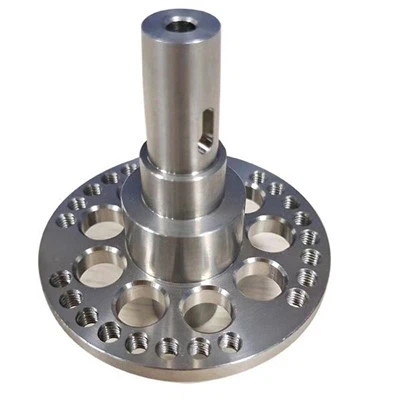
Visual inspection is the most basic yet crucial step in the quality control process of CNC milling parts. It involves a thorough examination of the part’s surface using the naked eye or with the aid of magnifying tools. This can reveal obvious defects such as cracks, scratches, pits, or rough edges that may affect the functionality and aesthetics of the part.
We train our inspection staff to use proper lighting and angles to detect these imperfections. Different parts may require different levels of visual scrutiny, and sometimes we use microscope – based inspection for extremely small or high – precision components. For instance, in the production of medical implant parts, the surface finish is of vital importance, so a detailed visual inspection can prevent faulty parts from reaching the end – user.
Dimensional Inspection
One of the primary requirements for CNC milling parts is to meet specific dimensional tolerances. Dimensional inspection is used to verify that the part has been milled to the correct size.
- Calipers and Micrometers: These are the most common hand – held measuring tools. Calipers can measure both internal and external dimensions, and micrometers provide extremely accurate measurements. We use them to quickly check basic dimensions such as diameters, lengths, and widths during the production process. For example, if we are manufacturing a shaft, we use micrometers to ensure that the diameter of the shaft meets the specified tolerance.
- Coordinate Measuring Machines (CMMs): CMMs are highly accurate and sophisticated measuring devices. They can precisely measure the geometry and dimensions of complex parts. A CMM uses a probe to touch various points on the surface of the part, and then the data is processed to generate a 3D model of the part. This allows us to compare the actual part with the CAD design, checking for any deviations in shape and size. CMMs are especially useful for parts with complex contours, such as turbine blades.
- Optical Measuring Systems: These systems use camera – based technology to measure parts. They are non – contact measuring methods, which are suitable for delicate parts or parts with soft surfaces that could be damaged by contact measurement. Optical measuring systems can quickly capture the shape and dimensions of a part, and some advanced systems can even measure multiple parts simultaneously, improving inspection efficiency.
Surface Roughness Inspection
The surface roughness of CNC milling parts can significantly impact their performance, especially in applications where parts need to fit together precisely or where friction is a concern.
- Surface Roughness Testers: These devices work by dragging a stylus across the surface of the part. The stylus detects the microscopic peaks and valleys on the surface, and the instrument then calculates the surface roughness parameters, such as Ra (arithmetical mean deviation of the profile). We use surface roughness testers to ensure that the parts meet the required surface finish standards. For example, in the production of hydraulic components, a smooth surface finish is necessary to prevent leakage and wear.
- Optical Profilometers: Optical profilometers use light to measure the surface topography. They can provide high – resolution 3D images of the surface, allowing for a more detailed analysis of the surface roughness. Unlike stylus – based testers, optical profilometers are non – contact, which makes them suitable for measuring delicate or complex surfaces.
Material Inspection
The quality of the material used in CNC milling parts is just as important as the machining precision. We need to ensure that the material meets the required specifications in terms of composition, hardness, and structure.
- Material Analysis: We use techniques such as spectroscopy and chemical analysis to determine the composition of the material. Spectroscopy can accurately identify the elements present in the material, which is crucial for ensuring that the material meets the specified alloy requirements. For example, in the production of aerospace components, the exact chemical composition of the metal is strictly controlled to ensure the safety and performance of the parts.
- Hardness Testing: Hardness is an important property of machined parts. We use hardness testing methods such as Rockwell, Brinell, and Vickers to measure the hardness of the material. Hardness testing can help us detect any issues with the heat treatment process or the material itself. For example, if the hardness of a part is too low, it may wear out quickly in service.
- Microstructural Analysis: This involves examining the internal structure of the material under a microscope. Microstructural analysis can reveal information about the grain size, phase distribution, and any defects in the material’s structure. It is particularly important for materials that undergo heat treatment or other processing steps that can affect their microstructure.
Functional Testing
In addition to the above inspections, functional testing is also necessary to ensure that the CNC milling parts perform as expected in their intended applications.
- Simulation Testing: We use computer – based simulation software to simulate the operating conditions of the part. This can help us predict how the part will behave under different loads, temperatures, and other environmental factors. For example, in the design and production of automotive engine components, we can use simulation testing to optimize the performance of the parts and ensure their durability.
- Physical Testing: This involves subjecting the parts to real – world operating conditions to test their functionality. For example, we may test the pressure – resistance of a hydraulic part by applying high pressure to it. Physical testing can uncover any potential problems that may not be detected through other inspection methods.
Inspection during the Manufacturing Process
Inspection should not be a one – time event at the end of the manufacturing process. We conduct periodic inspections during the CNC milling process to catch any issues early and make necessary adjustments.
- In – process Gauging: We use gauges to measure the dimensions of the part as it is being machined. This allows us to make real – time adjustments to the machining parameters if the dimensions deviate from the specified tolerances. For example, if the diameter of a hole is being milled and the in – process gauge shows that it is slightly off – target, we can adjust the cutting tool immediately.
- Tool Monitoring: The condition of the cutting tools used in CNC milling can significantly affect the quality of the parts. We use tool monitoring systems to detect tool wear and breakage. When a tool is worn or broken, it can produce defective parts, so timely replacement of the tool is essential.
Conclusion
In summary, as a supplier of CNC milling parts, we rely on a combination of visual inspection, dimensional inspection, surface roughness inspection, material inspection, functional testing, and in – process inspection to ensure the quality of our products. Each inspection method plays a vital role in the overall quality control process, helping us deliver high – precision and reliable parts to our customers.
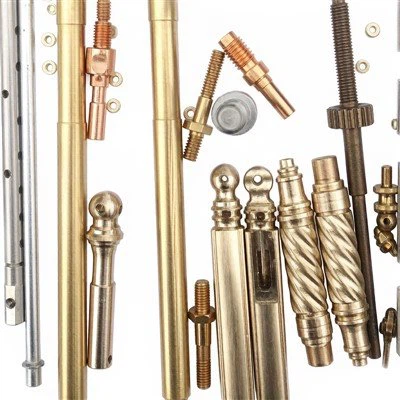
If you are in need of high – quality CNC milling parts, we invite you to contact us for procurement discussions. Our team of experts is ready to provide you with detailed information and customized solutions to meet your specific requirements.
Grinding Parts References:
- ASME Y14.5 – 2018, Dimensioning and Tolerancing
- ISO 4287:1997, Geometrical Product Specifications (GPS) – Surface texture: Profile method – Terms, definitions and surface texture parameters
- ASTM E10 – 18, Standard Test Method for Brinell Hardness of Metallic Materials
Suzhou Huaquan Electromechanical Manufacturing Co., Ltd.
As one of the leading CNC milling parts manufacturers in China, we warmly welcome you to buy bulk customized CNC milling parts made in China here from our factory. If you have any enquiry about pricelist and free sample, please feel free to email us.
Address: No.7550 Mudong Road, Hengjing Town, Wuzhong District, Suzhou City, Jiangsu Province, China
E-mail: Huaquan2005@outlook.com
WebSite: https://www.huaquancnc.com/
