If you’ve ever stood next to a large industrial AC axial fan on a sweltering summer day, you’ve felt its power: a rush of moving air that can cool a warehouse, dry construction material, or pull exhaust fumes away from a work site. But what many people don’t realize is that the fan’s ability to deliver that powerful flow has very little to do with the fan itself—and almost everything to do with the air around it. For years, as an AC axial fan supplier, I’ve watched customers install a fan that worked perfectly in a temperate climate, only to be disappointed when it underperforms in a high-altitude desert or a humid coastal port. The culprit, more often than not, is air density. Today, I want to break down what air density is, how it impacts axial fan performance, and what that means for anyone choosing or using these fans. AC Axial Fan
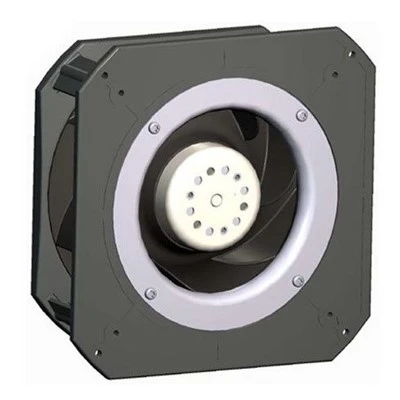
Let’s start with the basics. Air density is simply the mass of air molecules packed into a given volume of space. Think of it like packing a suitcase: a small suitcase can hold more heavy clothes than a big one if the clothes are tight, just like cool, dry air holds more molecules than warm, humid air. Several factors change air density, but two are the most impactful for fans: altitude and humidity. Higher altitudes mean the air pressure is lower—there’s less atmosphere pushing down, so air molecules spread out. That’s why hikers struggle to catch their breath at 10,000 feet; each breath takes in fewer oxygen molecules, and the same logic applies to fans. Humidity also plays a role: moist air has water molecules, which are lighter than nitrogen and oxygen molecules that make up most of dry air. So on a humid day, air is less dense than a dry day at the same temperature and altitude. Even small changes in density can throw a fan’s performance off, and that’s a problem because axial fans are designed to work within very specific performance parameters.
Axial fans move air by spinning blades that push air parallel to the fan’s axis, like a boat propeller pushing water. The two most critical performance metrics for these fans are air flow rate (measured in cubic feet per minute, or CFM) and static pressure (measured in inches of water gauge, or in H2O). Air flow is how much air the fan moves, and static pressure is the force the fan exerts to push that air through obstacles—like ductwork, filters, or around equipment. When air density changes, both of these metrics shift, even if the fan is spinning at exactly the same speed with the same power input.
Let’s talk about flow rate first. If you’ve ever watched a fan test, the lab setting uses standard air density—usually 0.075 pounds per cubic foot, which is the density of dry air at 70°F and sea level. Fans are rated against this standard, so when you buy a fan listed at 10,000 CFM, that’s how much air it moves at standard conditions. But if you take that same fan to a place with lower density air—say, Denver, Colorado, which is about 5,280 feet above sea level—the air is roughly 12% less dense. The fan’s blades are still spinning at the same RPM, and each blade is moving the same volume of air, right? Wait, no—here’s the trick. The blades don’t move “volume”; they move mass. So if the air is less dense, the same volume of air has less mass. That means the fan is moving less total mass, and the flow rate drops. In that Denver example, that 10,000 CFM fan might only move around 8,800 CFM, a 12% drop that could be the difference between a properly cooled server room and one that overheats.
It’s not just altitude. Let’s say you run a fan in a port in Houston, Texas, where humidity is often 80% in the summer, and temperatures climb to 95°F. That air is both warm and humid, so density is about 15% lower than standard conditions. That same 10,000 CFM fan would drop to roughly 8,500 CFM. That’s a big gap, and I’ve seen firsthand how that surprises customers. A few years back, we worked with a customer in Houston who bought a set of axial fans from a supplier based in a Midwestern city. The fans were rated for a warehouse that needed 10,000 CFM total, but after installation, they were only getting 8,200 CFM. The warehouse was too hot, and productivity dropped. When we ran tests, we found the air density in Houston’s humid summer conditions was lower than the Midwest, and the original supplier’s rating didn’t account for that. We helped them adjust their system by sizing fans with extra capacity to compensate for the local density, and their performance went back to normal.
The second big metric is static pressure. This is where things get even more interesting, because static pressure doesn’t just drop with density—it affects how much work the fan has to do. Static pressure is the resistance the fan has to overcome to push air through the system, like the pressure needed to push water through a hose. When air density is lower, the fan has to work harder to move the same amount of air against that resistance. Why? Because resistance (static pressure) is measured based on the force per unit area, and less dense air means that force is spread over fewer molecules. So if a fan is designed to move air against 0.5 in H2O of static pressure at standard density, at 10,000 feet altitude, that same static pressure resistance feels like more to the fan. It’s like trying to blow up a balloon with thin air vs. thick air: you have to push harder to get the same amount of air into the balloon when the air is thinner.
What does that mean for fan power? Power is the third key metric, measured in watts or horsepower. If the fan has to work harder to push air against the same static pressure, its power consumption goes up—even if flow rate is lower. That’s a double whammy for customers: they get less air flow, and they pay more in electricity. I mentioned that Denver example earlier: at 5,280 feet, a fan that uses 1 horsepower at sea level might use 1.12 horsepower at altitude just to overcome the higher effective static pressure. Over a year, that adds up to hundreds of extra dollars in energy costs. For industrial customers running multiple fans 24/7, that’s a significant expense. And in warm, humid conditions, that power jump can be even higher. A 2018 study from the American Society of Heating, Refrigerating and Air-Conditioning Engineers (ASHRAE) found that for every 1,000 feet of altitude gain above sea level, axial fan power increases by roughly 2% to 3%, while flow rate drops by about the same percentage. That’s a consistent trend I’ve seen in every project we’ve worked on.
Wait, but is there a case where higher density air is a problem? That’s a question I get all the time. If dense air is heavier, would a fan moving dense air work too well? Actually, no—higher density air means more mass per volume, so the fan moves more air mass, but flow rate (CFM) actually goes up. For example, a fan running on a cold, dry day at sea level—winter in Chicago, say, where air density is around 0.082 lb/ft³, about 9% higher than standard—will move roughly 9% more CFM than it’s rated for. That might sound good, but it can cause other issues: if the fan is installed in a system designed for standard CFM, too much flow can create turbulence, damage ductwork, or even overload the motor if the power draw spikes too high. I’ve seen a bakery where the axial exhaust fan was moving too much air in winter, pulling so much cold air into the kitchen that the ovens couldn’t maintain their temperature, costing them thousands in spoiled bread. So it’s not just low density that causes problems; high density can lead to performance spikes that are just as bad.
So what can customers do to avoid these issues when choosing an AC axial fan? As a supplier, our job isn’t just to sell fans—it’s to help customers match the fan to their specific conditions. The first step is always to calculate the air density of the location where the fan will be installed, not just rely on standard ratings. That means factoring in altitude, average temperature, and typical humidity levels. For example, a fan for a mine at 12,000 feet will need to be sized 15% to 20% larger than a fan for a similar application at sea level, to make up for the lower density. For a coastal facility, sizing for high humidity and warm temperatures is just as important.
Another thing we recommend is selecting fans with adjustable speed drives (ASDs). These let you tweak the fan’s RPM to match the current air density and system needs. On a cool, dry day, you can slow the fan down a bit to avoid too much flow, saving energy; on a hot, humid day when density is low, you can speed it up to get the flow you need. I recently worked with a data center in Phoenix, which has hot, dry summers and cold, dry winters. They installed axial fans with ASDs, and over the first year, they reduced their fan energy costs by 22% by adjusting speed to match daily density changes. That’s a huge win for their bottom line.
It’s also important to consider the fan’s blade design. Some axial fan blades are optimized for high density air, while others work better for low density. High-efficiency blades with airfoil shapes, for example, can move more air with less power when density is low, because they’re shaped to push more mass per revolution. When a customer is working in a high-altitude or high-humidity location, choosing the right blade design can offset much of the density-related performance drop.
I know that for someone who’s not familiar with fan dynamics, all this talk about air density can feel overwhelming. It’s tempting to just pick the fan with the highest CFM rating, but as we’ve seen, that rating is only accurate at standard conditions. For years, I’ve seen customers make that mistake and end up with a fan that doesn’t meet their needs. That’s why we take the time to walk through their specific application: where it’s located, what the system requires, what typical temperatures and humidity are. We don’t just send a catalog number; we work with them to calculate exactly what size, speed, and blade design will work best for their unique conditions.
Let me share another recent example to put this in perspective. A customer who runs a concrete drying facility in Colorado contacted us last month. They were using four axial fans that worked great when they installed them two years ago, but as summer hit, the concrete was taking longer to dry, cutting into their production schedule. The facility is at 5,500 feet, so air density is about 13% lower than standard. Their original fans were rated for 12,000 CFM each, but in the Colorado summer, they were only moving 10,400 CFM. We recommended replacing two of the fans with 14,000 CFM models, sized to account for local density, and pairing them with ASDs to adjust for seasonal changes. After installation, their drying time dropped by 18%, and they cut fan energy use by 10% because they can slow the fans down in the cooler spring and fall. That’s the kind of solution that comes from understanding how air density impacts fan performance, and that’s what we pride ourselves on as a supplier.
At the end of the day, air density is a fundamental, often overlooked factor in axial fan performance. It’s not something you can see or touch, but it’s the invisible force that determines how much air your fan moves, how much power it uses, and whether it works for your needs. Whether you’re running a warehouse, a data center, a manufacturing plant, or a construction site, taking air density into account when choosing an AC axial fan will save you money, avoid downtime, and ensure your system performs as intended.
If you’re dealing with fan performance issues, or you’re planning a new installation and want to make sure you get the right fan for your conditions, feel free to reach out to us to discuss your specific needs. We’re here to help you cut through the complexity and find a solution that works for you.
Industrial Cooling Fan References
ASHRAE. (2017). HVAC Applications Handbook. American Society of Heating, Refrigerating and Air-Conditioning Engineers.
Momentum Technologies. (2020). Axial Fan Performance: The Impact of Air Density and Altitude. Technical Bulletin No. FT-2020-04.
Miller, T. J. (2019). Fan Aerodynamics and Performance. CRC Press.
Dongguan Shengzhirong Electronics Co., Ltd.
As one of the most professional ac axial fan manufacturers and suppliers in China, our products have good reputation in the market. Please rest assured to wholesale high quality ac axial fan made in China here from our factory. Customized orders are welcome.
Address: 6/F, Building 2, No.68, Shunxing 2nd Road, Dajingtou 2nd Industrial Zone, Dalang Town, Dongguan City, Guangdong, China
E-mail: szr_coolingfan@163.com
WebSite: https://www.szrfan.com/
