Hey there! I’m a supplier of steel investment castings, and over the years, I’ve learned a thing or two about how to boost the yield of these products. In this blog, I’m gonna share some practical tips and strategies that have worked well for me. Steel Investment Castings

1. Quality Control at the Design Stage
When it comes to improving the yield of steel investment castings, you gotta start right at the design phase. A well – designed casting can minimize the chances of defects later on. First off, make sure to keep the wall thickness as uniform as possible. If you have sections with significantly different wall thicknesses, it can lead to uneven cooling during the casting process. This uneven cooling often results in defects like shrinkage cavities.
Let’s say you’re designing a complex part. You can use computer – aided design (CAD) software to simulate the casting process. It’ll help you identify potential problem areas before you even start making the casts. You can play around with different geometries and make adjustments based on the simulation results. For instance, if the simulation shows that a particular corner is likely to have a hot spot (a place where the metal cools slower), you can add some fillets or change the shape slightly to improve the heat flow.
Another important aspect is the gating and risering system design. The gating system is responsible for getting the molten steel into the mold cavity, and the riser acts as a reservoir to supply additional metal as the casting solidifies. A good gating system should ensure a smooth and even flow of the molten metal. If the metal rushes in too fast, it can cause turbulence and trap gas bubbles in the casting. On the other hand, if it flows too slowly, it might solidify before filling the entire cavity.
The riser needs to be placed in the right location to feed the areas that are most likely to shrink. You have to calculate the size and shape of the riser carefully. A riser that’s too small won’t be able to supply enough metal, while an overly large one is a waste of material and energy.
2. Raw Material Selection
The quality of the raw materials you use has a huge impact on the yield of your steel investment castings. You’ve got to choose high – quality steel alloys. Look for suppliers who can provide consistent and reliable materials. Check for the chemical composition of the steel. It should meet the specific requirements of your casting application.
For example, if you’re making castings that will be exposed to high temperatures, you’ll need a steel alloy with good heat – resistance properties. Also, pay attention to the cleanliness of the raw material. Impurities like sulfur and phosphorus can cause cracking and other defects in the casting. So, make sure the steel you’re using has low levels of these impurities.
It’s also a good idea to do some pre – tests on the raw material. You can analyze the grain structure of a sample to get an idea of how it’ll behave during the casting process. If the grain structure is too coarse, it might affect the mechanical properties of the final casting. You can then adjust your processes or select a different batch of steel if necessary.
3. Mold Making
The quality of the mold is crucial for a high yield of steel investment castings. In investment casting, we usually use wax patterns to create the molds. The wax patterns need to be made accurately. Any errors in the wax pattern will be transferred to the final casting.
When making the wax patterns, make sure to use the right type of wax. There are different waxes available, each with its own properties. Some waxes are more suitable for complex shapes, while others are better for larger parts. You also need to control the temperature and pressure during the wax injection process. If the temperature is too high, the wax might deform, and if the pressure is incorrect, the wax pattern might have air bubbles or incomplete filling.
Once the wax patterns are made, they are assembled into a cluster and then coated with a ceramic shell. The ceramic shell has to be strong enough to withstand the high temperature and pressure of the molten steel. The coating process should be done carefully to ensure an even and dense ceramic layer. You can use multiple layers of ceramic with different particle sizes to improve the strength and finish of the shell.
4. Melting and Pouring
The melting process is where the magic starts, but it also needs to be done right. You should use a proper melting furnace and follow a standardized melting procedure. Keep a close eye on the temperature of the molten steel. If the temperature is too low, the steel might not flow properly into the mold, resulting in incomplete castings. If it’s too high, it can cause excessive oxidation and increase the risk of defects.
During pouring, the speed and angle of the pour are important. You want to pour the molten steel smoothly into the mold. A jerky or uneven pour can introduce air bubbles and cause other problems. You can use a ladle or a pouring system that allows for precise control of the pour. Also, make sure to keep the area around the pouring site clean to prevent any foreign objects from getting into the molten steel.
5. Heat Treatment
After the casting is made, heat treatment can play a big role in improving its quality and yield. Heat treatment can help relieve internal stresses in the casting, which are often caused by the uneven cooling during the casting process. These internal stresses can lead to cracking over time, especially in parts that are subjected to mechanical loads.
You can use different types of heat treatments, such as annealing, quenching, and tempering, depending on the requirements of your casting. Annealing is a process where the casting is heated to a specific temperature and then slowly cooled. This helps to soften the steel and improve its machinability. Quenching involves heating the casting and then rapidly cooling it, which can increase its hardness. However, quenching can also cause high internal stresses, so it’s often followed by tempering to reduce these stresses.
6. Inspection and Testing
Regular inspection and testing are essential for improving the yield of steel investment castings. You should conduct inspections at every stage of the process. For example, after the wax patterns are made, you can use non – destructive testing methods like visual inspection or dimensional measurement to check for any defects.
Once the castings are made, you can use more advanced testing methods. Non – destructive testing techniques such as ultrasonic testing, magnetic particle testing, and radiographic testing can help you detect internal defects like cracks, porosity, and inclusions. Mechanical testing, such as tensile testing and hardness testing, can give you an idea of the casting’s mechanical properties.
Based on the test results, you can identify any areas that need improvement in your process. If you find a high number of defects in a particular batch, you can analyze the process steps to figure out what went wrong. Maybe there was an issue with the raw material, or the heat treatment was not done correctly.
Conclusion
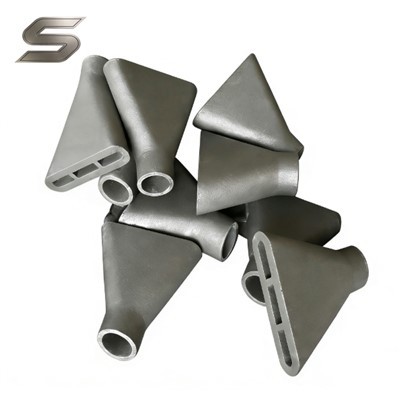
Improving the yield of steel investment castings isn’t a one – time thing. It’s an ongoing process that involves careful attention to every step, from design to inspection. By following these tips and constantly looking for ways to optimize your processes, you can significantly increase the number of good – quality castings you produce.
Stainless Steel Investment Castings If you’re interested in our steel investment castings or want to discuss how we can improve the yield for your specific needs, feel free to reach out. We’re always happy to have a chat and see how we can work together to meet your requirements.
References
- "Investment Casting Handbook" by the Investment Casting Institute
- "Foundry Technology" by various authors in the field of metallurgy and casting
Hebei Shata Machinery Co., Ltd.
As one of the most experienced steel investment castings manufacturers and suppliers in China, we have advanced foundry technique and professional production team. Welcome to buy high-grade steel investment castings for sale here from our factory. All custom made products are with high quality and competitive price.
Address: No.11 Cangshun Rd., Shijiazhuang, Hebei, China
E-mail: Info@shatamachinery.com
WebSite: https://www.shatamachinery.com/
