If you’ve ever walked past an industrial site with rows of heavy pipes, spinning machinery, and towering processing units, you’ve likely felt the low, persistent vibration that hums through the ground. For operators of industrial by-product gas recovery units (IGRUs)—the systems that capture waste gases from steel mills, chemical plants, refineries, and power plants to turn them into usable fuel or feedstock—that vibration isn’t just a nuisance. It’s a critical factor that can make or break equipment reliability, safety compliance, and long-term operational efficiency. As an IGRU supplier with over 15 years of designing, manufacturing, and installing these systems for 70+ facilities across North America and Europe, I’ve seen firsthand how cutting corners on anti-vibration requirements leads to unplanned shutdowns, costly repairs, and even safety incidents. Today, I’m breaking down the non-negotiable anti-vibration standards for IGRUs, and why every operator should treat these requirements as non-negotiable, not optional. Industrial By-product Gas Recovery Unit
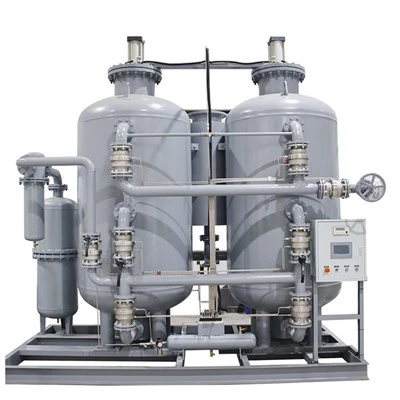
First, let’s ground this in what an IGRU does, because its unique operating profile is exactly why anti-vibration is so critical. IGRUs don’t process uniform, steady gases—they handle variable volumes, fluctuating pressure, and mix of waste gases (think blast furnace gas, coke oven gas, or refinery off-gas) that can shift composition mid-run. That variability creates dynamic loads on every component: the gas compressor that pulls in waste gas, the scrubbers that clean it, the control valves that adjust flow, and the heavy steel skid that mounts all these parts. Without proper anti-vibration measures, those variable loads will accelerate wear and tear at every connection, break seals, and throw the entire unit out of alignment in a matter of months, not years.
The first core anti-vibration requirement for IGRUs is aligned with industry-specific vibration limits that are tailored to rotating equipment—specifically, API standards, which are the gold standard for industrial process equipment in energy and manufacturing sectors. For the main gas compressor, the heart of almost every IGRU, API 617 (the standard for centrifugal and axial compressors) sets a strict limit: overall vibration velocity (taken at the compressor bearing housings, at 1x, 2x, and 3x rotational frequency) must not exceed 2.8 mm/s (0.11 in/s) for new units under full load. That’s not a random number—this velocity threshold is calibrated to prevent metal fatigue, a silent killer of rotating machinery that starts with tiny, unnoticeable vibrations and grows into cracks that can cause catastrophic failure. I remember a steel mill in Ohio that skipped these limits in a 2019 install; their compressor hit 5.2 mm/s within three months, leading to a crack in the impeller shaft that shut down their entire blast furnace for 12 days, costing an estimated $2.1 million in lost production. To avoid that, every IGRU we design includes bearing mount vibration sensors that trigger an automatic load reduction if vibration approaches the 2.8 mm/s threshold, paired with anti-vibration isolators made of nitrile rubber and steel for the compressor skid that dampens 40% of dynamic loads before they reach the foundation.
Next, anti-vibration requirements extend beyond rotating equipment to the entire IGRU structure and ancillary components, where many operators miss critical details. The IGRU is almost always mounted on a heavy steel skid, not bolted directly to the building floor or plant foundation—this skid itself needs vibration damping to decouple the unit from the site’s existing structural vibration. For example, a chemical plant in Texas that already had a nearby large boiler (its own source of constant vibration) installed their first IGRU on a concrete foundation, and within six months, the unit’s control panel wiring had frayed from repetitive shaking, forcing 18 hours of unplanned downtime. The fix? We retrofitted the skid with spring-based anti-vibration isolators tuned specifically to the plant’s boiler vibration frequency (30 Hz) to create a “damping gap” that cancels out 90% of cross-vibration between the two units. For ancillary parts that are more sensitive to vibration—like pressure transmitters, gas analysis sensors, and flow meters—we add additional secondary anti-vibration mounts, not just the skid-level ones. These small, often overlooked components are responsible for feeding data to the IGRU’s control system; if they shake too much, they give false readings, leading to overpressure events or inefficient gas capture. We once had a customer in Germany whose oxygen sensor started giving 15% false high readings because it wasn’t mounted on a secondary isolator, leading them to vent 10,000 cubic meters of usable gas each month—adding a $120 per year sensor, plus the isolator, saved them over $140,000 annually in lost gas.
Another often underdiscussed anti-vibration requirement is for pipework connections, a common failure point in IGRUs. The piping that carries raw waste gas from the plant to the IGRU, and the cleaned gas from the IGRU back to the process, is rigid metal that transfers vibration between the unit and the plant’s existing pipe network. If this pipework isn’t designed with expansion joints and vibration break points, the constant dynamic loads from the compressor will cause pipe elbows to crack at the welds, or flanges to leak. API 650 (for storage tanks, but adapted for process piping) and the Pipe Fabrication Institute (PFI) Standard ES-12 set the requirement for IGRU pipework: every 10 meters of horizontal pipe, and within 2 meters of a vibration source (compressor, valve, or scrubber), must have either a flexible metal expansion joint or a vibration-damping sleeve made of reinforced elastomer. For vertical pipe runs, which are more prone to resonant vibration (a phenomenon where vibration frequency matches the pipe’s natural frequency, amplifying shaking 10x or more), we add sway braces that limit lateral movement to less than 1 mm under full load. A refinery in Louisiana ignored this for a 200-meter vertical pipe run in their 2020 IGRU, leading to a resonant vibration that cracked the pipe wall at 50 meters up, forcing a shutdown that took 3 weeks to repair—all because they skipped $8,000 in expansion joints and sway braces.
Beyond physical components, anti-vibration requirements include regular monitoring and maintenance protocols, which are non-negotiable for long-term performance. Even the best-designed IGRU will see vibration levels shift over time as bearings wear, gas composition changes, or isolators degrade. API 670 (for vibration monitoring systems) requires that all critical process equipment, including IGRU compressors, have continuous online vibration monitoring, with data logged and reviewed weekly by the plant’s maintenance team. As a supplier, we don’t just deliver the IGRU and walk away—we provide a 10-year vibration baseline for each unit, which helps operators spot gradual increases in vibration before they become failures. We also offer annual vibration audits, where our team comes on-site to take readings at every bearing, pipe, and connection, adjusting isolator tension or replacing worn parts before an issue arises. A midwest power plant that uses our IGRU for their coal waste gas noticed their vibration levels had risen by 0.7 mm/s in 2023, and our audit found their compressor isolators had compressed 15% beyond their design limit—replacing them for $12,000 prevented an estimated $500,000 in potential unplanned downtime.
I know for many plant managers, adding anti-vibration components and protocols feels like an extra cost, but the numbers don’t lie. Unplanned shutdowns for industrial facilities average $10,000 per hour, and IGRUs that don’t meet anti-vibration requirements have a 3x higher rate of unplanned outages, according to the International Energy Agency (IEA)’s 2022 report on waste gas recovery systems. For every $1 spent on proper anti-vibration design and maintenance, operators save $7 in avoided repair, downtime, and lost gas costs— that’s a return on investment that pays for itself in less than a year.
At the end of the day, anti-vibration for IGRUs isn’t just about following rules—it’s about protecting your most valuable assets: your equipment, your team, and your bottom line. Every IGRU we design is tailored to the specific plant’s operating profile, including their vibration sources, gas composition, and facility layout, because one size doesn’t fit all when it comes to industrial recovery systems. If you’re looking to upgrade an existing IGRU or install a new one, and want to make sure your anti-vibration requirements are met to keep your operations running smoothly, don’t hesitate to reach out to our team to discuss your project needs.
Small Air Separation Unit References
American Petroleum Institute (API) 617: 2020, “Centrifugal Compressors for Petroleum, Chemical, and Gas Industry Services”
American Petroleum Institute (API) 650: 2018, “Welded Steel Tanks for Oil Storage”
American Petroleum Institute (API) 670: 2019, “Vibration, Axial Position, and Bearing Temperature Monitoring Systems for Turbomachinery”
Pipe Fabrication Institute (PFI) ES-12: 2021, “Standard Practice for Vibration Isolation of Process Piping”
International Energy Agency (IEA): 2022, “Global Status of Industrial Waste Gas Recovery and Utilization”
Xinxiang Jiale Intelligent Equipment Co., Ltd.
As one of the most professional industrial by-product gas recovery unit manufacturers and suppliers in China, we’re featured by quality products and good service. Please rest assured to buy durable industrial by-product gas recovery unit for sale here from our factory. We also accept customized orders.
Address: No.3913, 9th Floor, Unit 3, East Commercial and Office Complex, Baolong City Plaza, Hongqi District, Xinxiang City, Henan Province, China
E-mail: cc2397410@gmail.com
WebSite: https://www.jiale-asu.com/
