Alright, let’s cut to the chase—if you’re an LPG gas compressor user, you know half the battle isn’t even the compressor itself, it’s getting the storage for it right. As a supplier who’s talked to hundreds of operators from small propane delivery fleets to big petrochemical plants, I’ve seen way too many guys skip the storage basics and end up with a compressor that’s dead in the water before it even hits the skid. Let’s break this down like we’re hanging out in a garage, no fancy jargon that makes your eyes glaze over. LPG Gas Compressor
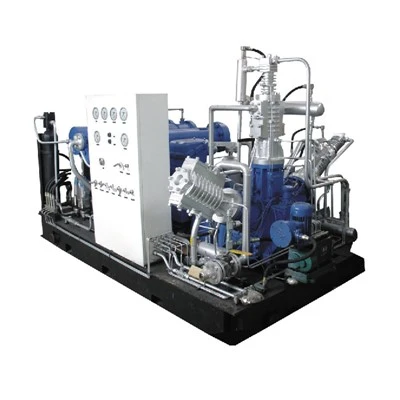
First, let’s get one thing straight: LPG is tricky. It’s a mix of propane and butane, right? It turns from liquid to gas when pressure drops, and vice versa when pressure goes up. So your compressor’s storage setup isn’t just “stick a tank next to it” — it’s tailored to how your compressor works, how much LPG you’re moving, and most importantly, safety (we can’t skip that, because OSHA and the NFPA will be breathing down your neck if you mess up).
Let’s start with the core storage units: the LPG storage tanks. Wait, not all tanks are created equal. For compressor feed, you need what we call “liquid storage tanks” (sometimes called vessels) that are ASME-rated — that’s the American Society of Mechanical Engineers, the guys who write the code for pressure vessels. No skimping here. I’ve had a customer try to use an old water tank for a compressor feed once—blown a gasket in 6 months, cost them $20k in downtime. Moral of the story: only use ASME-certified pressure vessels for LPG storage tied to your compressor.
Now, what size do you need? That depends on two things: your compressor’s flow rate, and your operational schedule. Let’s say your compressor moves 50 gallons of LPG per hour, and you run it 8 hours a day — you don’t need a 10,000-gallon tank. But if you run it 24/7 for a plant that’s processing LPG for refueling stations, you might want a surge tank that holds 2-4 hours of continuous flow, plus a main storage tank that refills the surge tank when it drops. Wait, surge tanks are key here—they prevent your compressor from “pulling a vacuum” on the main tank, which can make the LPG vaporize too fast and damage the compressor’s pistons or valves. I always tell customers: size your surge tank to handle at least 30 minutes of your compressor’s maximum flow. That way, if the main tank refills, there’s no dip in pressure that messes with the compressor.
Next, pressure and temperature. This is where most new guys mess up. LPG storage has to be maintained at a pressure that keeps it mostly liquid, because your compressor is designed to move liquid LPG (vapor LPG is way harder to compress, and can cause a slugging effect that breaks compressor parts). Propane has a vapor pressure of around 100 psi at 70°F; butane is lower, like 30 psi at the same temp. So if your LPG is a 50/50 mix, your storage pressure needs to be between those two — usually 50-80 psi, depending on ambient temp. If it’s cold outside, say 30°F, butane’s vapor pressure drops, so you might need a little higher pressure to keep it liquid. If it’s hot, 90°F, propane’s pressure jumps, so you don’t want to overpressurize the tank. Your compressor’s inlet pressure should match this storage pressure, too — we design our compressors to take inlet pressures from 20 psi to 150 psi, so you just need to set your storage tank’s pressure regulator to land right in that sweet spot.
Temperature control is another big one. If your storage tank is sitting in direct sunlight, the LPG will heat up, pressure will spike, and that’s a safety hazard (not to mention you’ll lose LPG to vapor venting, which is money down the drain). So you need either: a shaded storage area, a tank insulation blanket, or even a small heat trace system if you’re in a super cold climate. Wait, cold is bad too—if LPG gets too cold, it’s too viscous, and it won’t flow smoothly to the compressor inlet. We’ve had a Canadian customer run a compressor in -20°F and didn’t insulate their lines—LPG turned slushy, compressor seized up in 2 hours. Lesson: temperature control isn’t just for heat in the cold, it’s for shade in the heat.
Then there’s the piping between storage and compressor. No cheap galvanized pipe, by the way—use black steel pipe or Schedule 80 stainless steel. Galvanized has zinc that can flake off and contaminate the LPG, which ruins compressor internals. Also, slope the piping slightly toward the storage tank—any liquid that vaporizes in the lines will drain back, so you don’t get vapor going into the compressor. And add a strainer right before the compressor inlet—catches any rust, debris, or leftover sediment from the tank. I always tell customers to replace that strainer every 3 months; it’s a $50 part that saves you $10k in repairs.
Safety storage requirements? You can’t ignore these. First, every LPG storage tank needs a pressure relief valve (PRV) that’s sized for the tank’s capacity—if pressure gets too high, it vents excess vapor, not the whole tank blowing. Also, install a liquid level gauge so you don’t run the tank empty—running your LPG compressor dry is the fastest way to kill it, because the pistons will have nothing to lubricate them. Oh, and fire suppression? Even if you’re careful, you need a nearby Class B fire extinguisher (for flammable liquids/gases) and make sure your storage area is at least 10 feet from any building or ignition source. We go over all these safety checks with every customer when we deliver a compressor, because cutting corners here isn’t worth it.
Wait, what about ambient conditions where the storage is located? If you’re putting the compressor and its storage in a dusty area (like a construction site), you need a particulate filter on the storage outlet. If it’s a humid area, make sure your storage tank has a vapor trap to keep moisture out—moisture in LPG can cause corrosion in the compressor cylinders. I’ve seen a compressor in Florida that corroded because they skipped the moisture trap; it only lasted a year.
Let’s also talk about how this ties to the compressor itself. When we build our LPG compressors, we design them to work with specific storage pressure and flow rates. So when a customer comes to me and says “I have a 5,000-gallon tank 50 feet from the compressor,” I don’t just sell them a compressor— I tell them, “Hey, that piping run is 50 feet, so you need a slightly higher inlet pressure because of friction loss, and you need a strainer rated for 2-inch line size.” We actually have a pre-installation checklist we send to every customer to make sure their storage is ready before we drop off the compressor. That’s why we’ve got a 98% uptime rate for our compressors—we don’t just sell equipment, we make sure the storage is set up right.
Wait, let’s clear up a common myth: some guys think you need a huge storage tank, but no—surge capacity is more important than total volume. If you’re refilling your storage tank on a scheduled basis, you don’t need a massive tank, just a surge tank that can keep the compressor running during refill. For example, if your main tank is refilled every 4 hours, a 100-gallon surge tank is enough to keep the compressor running while the main tank is disconnected. That saves on upfront cost for the customer.
Also, maintenance for the storage? It’s not a set-it-and-forget-it thing. You need to test the PRV every year, calibrate the level gauge monthly, check for leaks with soapy water (if you see bubbles, that’s a leak—fix it immediately, LPG is highly flammable). I always remind customers that the storage setup is half the compressor system, so if you skimp on storage maintenance, you’re skipping half the job.
Let me wrap this up like I would to a customer on a call: Look, the storage requirements for an LPG compressor aren’t rocket science, but they’re specific. You can’t grab any tank, stick it next to your compressor, and call it a day. You need ASME-rated vessels, sized for your flow and schedule, pressure-controlled to keep LPG liquid, temperature-regulated to avoid vapor venting or slushy LPG, proper piping, and non-negotiable safety gear. And if you’re not sure about any of this, that’s what we’re here for—we don’t just ship a compressor and disappear. We help you size your tanks, set up your pressure controls, go over safety checks, and even do a pre-startup inspection if you want.

If you’re in the market for an LPG compressor, or you’re upgrading your storage setup to work with your current one, hit us up to chat through your needs. No pushy sales stuff, just real advice from guys who’ve been in the LPG compressor game for years and have fixed way too many mistakes from people who didn’t get the storage right.
Oilfield Oil Well Gas Compressor Series References:
- National Fire Protection Association (NFPA 58), Standard for the Storage and Handling of Liquefied Petroleum Gases
- American Society of Mechanical Engineers (ASME Boiler and Pressure Vessel Code, Section VIII)
- Compressed Gas Association (CGA) pamphlet P-3, Storage and Handling of Liquefied Petroleum Gases
Shanghai Sollant Energy Saving Technology Co., Ltd.
As one of the most professional lpg gas compressor manufacturers and suppliers in China, we’re featured by quality products and good service. Please rest assured to buy bulk durable lpg gas compressor from our factory. Welcome to view our website for more information.
Address: No.215, Songri Center, Beihongqiao, Jiading District, Shanghai, China.
E-mail: info3@sollant.com
WebSite: https://www.sollant-gas.com/
